Fishing Permits, Day Tickets and Club Waters
A rod licence lets you use a rod and line; a permit lets you fish a particular water. You need both. Here is how permission works.

By Steve Dyke, Founder and editor
Updated
· Last reviewed · 3 min read
In short
- You need permission from the land or fishery owner as well as a rod licence; this is usually a fishing permit.
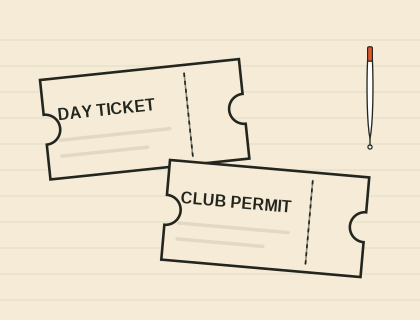
- Permission comes as a day ticket, a season ticket, angling club membership or a syndicate place.
- Fishing the locks and weirs on the River Thames needs a separate Environment Agency lock and weir permit.
- A permit never replaces the rod licence, even on a private lake.
What is the difference between a licence and a permit?
A rod licence is a legal requirement set by the government: it lets you fish with a rod and line in England and Wales. A permit is permission from whoever owns the fishing rights to fish their water. GOV.UK puts it simply: you need permission from the land or fishery owner to fish, as well as a rod licence, and that permission is usually a fishing permit.
What kinds of fishing permit are there?
- Day ticket
- Permission to fish for one day, bought on arrival, from a bailiff on the bank, online or from a local tackle shop. Most commercial fisheries work this way.
- Season or annual ticket
- Unlimited fishing on one fishery for a season or year.
- Club membership
- Joining an angling club gives access to all its waters, often listed in a club book with rules and maps. Clubs are usually the cheapest way to fish rivers and canals regularly.
- Syndicate
- A limited-membership water, often for specimen carp, with an annual fee and a waiting list.
- Guest ticket
- Some clubs let members bring a guest on a ticket.
What is the Thames lock and weir permit?
To fish from the designated fishing sites at Environment Agency locks and weirs on the River Thames you need a lock and weir fishing permit, as well as your rod licence. The key rules are:
- Fishing is allowed from 16 June to 14 March inclusive; there is no fishing from 15 March to 15 June.
- You can use 2 rods per permit; permits are non-transferable and you show yours to the lock keeper on arrival.
- Keepnets are not allowed at lock and weir sites.
- Anglers under 16 must be accompanied by an adult, and each needs their own permit and licence.
- Permit holders can bring a guest up to 3 times a year; the guest still needs their own rod licence.
You apply using the lock and weir fishing permit form on GOV.UK.
Where can you fish without a permit?
A few stretches of water allow free fishing, for example some public parks, certain canal lengths and some tidal rivers, but they're the exception, and you always still need your rod licence. Never assume a river is free to fish: most riverbanks are privately owned or controlled by clubs. If in doubt, ask a local tackle shop or the landowner. Canal fishing rights are often leased to angling clubs.
What rules come with a permit?
Fisheries can set their own rules on top of the national byelaws, including fewer rods, a ban on keepnets or braided line, barbless hooks, approved bait only, no night fishing, or their own close season. Breaking fishery rules can get you banned. Read the rules board before you set up.
What about Scotland and Northern Ireland?
In Scotland a permit is all you need, as there is no rod licence (except on the Border Esk). In Northern Ireland you need both a rod licence and a permit or day ticket. See licences in the four nations.
New to fishing? Our beginner's guide explains how to choose a first venue.
Sources and further reading
Didn't find your answer?
Ask us about rod licences, seasons or fishing rules and we'll add the answer to the site. For your own licence account, contact the Environment Agency directly.